Online Learning Management System: Features, Benefits & Best Practices
Introduction
The world of education is evolving at a rapid pace, and technology plays a pivotal role in this transformation. Enter the Online Learning Management System (LMS), a powerful tool that’s reshaping how we teach and learn. Whether you’re an educator, corporate trainer, or student eager to expand your knowledge base, an LMS can revolutionize your experience.
Imagine having access to a wealth of resources right at your fingertips—courses available anytime, anywhere with just a click! This innovation not only enhances learning but also streamlines administration for educators and organizations alike. As we explore the ins and outs of Online Learning Management Systems, you’ll discover their key features, remarkable benefits, best practices for implementation, and exciting future trends shaping the landscape of digital learning. Get ready to dive into everything there is to know about this essential educational tool!
What is an Online Learning Management System?
An Online Learning Management System (LMS) is a software platform designed to facilitate educational experiences. It allows organizations, schools, and businesses to manage training programs efficiently.
With an LMS, users can create courses, track progress, and assess learner performance. This digital framework makes education accessible anytime and anywhere.
The system centralizes all learning materials in one place. Whether it’s videos, quizzes, or reading resources, learners can find everything they need at their fingertips.
Additionally, administrators benefit from detailed analytics that provide insights into user engagement and outcomes. These features help refine the learning process over time.
In essence, an Online Learning Management System transforms traditional education methods by leveraging technology for enhanced learning experiences.
Key Features of an Online Learning Management System
An Online Learning Management System (LMS) comes equipped with various essential features that enhance the learning experience.
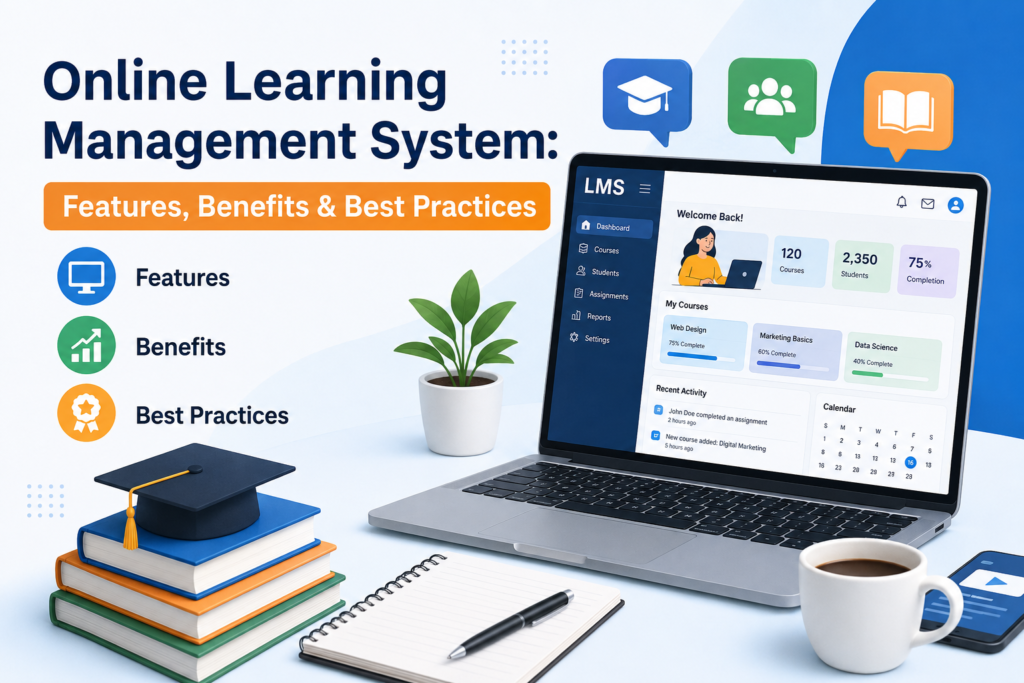
User-friendly dashboards allow learners to navigate courses effortlessly, providing an intuitive interface for both students and instructors. This simplicity promotes greater engagement.
Course management tools enable educators to create, organize, and deliver content efficiently. From multimedia resources to quizzes, these tools offer flexibility in instructional design.
Assessment capabilities are crucial as well. An LMS often includes built-in testing options that help measure learner progress through formative and summative assessments.
Collaboration features foster communication among users. Discussion forums, chat options, and group projects encourage interaction and peer-to-peer learning.
Robust analytics provide insights into learner performance. These data-driven evaluations help instructors tailor their teaching methods for improved outcomes while allowing organizations to track overall program effectiveness.
Benefits of an Online Learning Management System
An Online Learning Management System (LMS) transforms the educational experience for students and educators alike. One of its key benefits is flexibility. Learners can access materials anytime, anywhere, fitting their studies around busy schedules.
Cost-effectiveness is another advantage. With reduced travel and infrastructure expenses, organizations can allocate resources more efficiently. This leads to improved training initiatives without straining budgets.
Personalized learning paths enhance engagement and retention. An LMS allows instructors to tailor content based on individual progress and preferences, ensuring that each learner’s needs are met.
Data-driven insights provide valuable feedback for continuous improvement. Administrators can track performance metrics easily, identifying areas for enhancement in course design or delivery methods.
Collaboration tools foster a sense of community among learners and instructors. Discussion forums, group projects, and peer assessments encourage interaction beyond traditional classroom walls.
Best Practices for Implementing an LMS
Successful implementation of an Online Learning Management System requires careful planning. Start by identifying your organization’s specific needs. This ensures you choose a system that aligns with your goals.
Engage stakeholders early in the process. Involve educators, administrators, and even students to gather diverse insights. Their feedback will shape a more effective learning environment.
Train users thoroughly on the new system. Offer workshops or online tutorials to familiarize them with its features. A well-informed user is more likely to embrace the platform fully.
Set clear objectives for using the LMS from day one. Define what success looks like and how it will be measured over time. Regular assessments help keep everyone accountable.
Maintain ongoing support and communication after launch. Encourage users to share their experiences and challenges they face while adjusting to the new technology.
Challenges and How to Overcome Them
Implementing an online learning management system can come with its own set of challenges. One common issue is user resistance. Some employees may be hesitant to adopt new technology, fearing it will complicate their work.
To tackle this, providing comprehensive training sessions is essential. Create a support network where users can share experiences and tips.
Another challenge often faced is content overload. With so many resources available, learners might feel overwhelmed by choices.
A well-structured course layout helps here, guiding users through the material step-by-step while highlighting key information.
Technical glitches can also disrupt the learning experience. Regular updates and maintenance checks are vital for smooth operation.
Encouraging feedback from users allows you to identify pain points quickly and take proactive measures for improvement. This ongoing dialogue fosters a supportive environment that promotes engagement and success within your LMS framework.
Future Trends in Online Learning and LMS
As technology evolves, so does online learning. One prominent trend is the integration of artificial intelligence and machine learning into Learning Management Systems (LMS). These technologies personalize learning experiences, adapting content to meet individual student needs.
Additionally, there’s a growing emphasis on gamification. Incorporating game-like elements can boost engagement and motivation among learners. It transforms mundane tasks into exciting challenges.
Moreover, the rise of microlearning is shaping education delivery methods. Bite-sized lessons fit easily into busy schedules and cater to modern attention spans.
Virtual reality (VR) and augmented reality (AR) are also making strides in creating immersive educational environments. These tools offer practical experiences that traditional methods can’t replicate.
Mobile compatibility continues to be crucial as students increasingly rely on smartphones for their studies. An effective LMS will ensure seamless access across devices, fostering continuous learning anytime, anywhere.
Conclusion
The evolution of education has taken a significant turn with the advent of online learning management systems. These platforms offer an array of features that enhance the learning experience, making it more engaging and accessible for everyone involved.
Adopting an online learning management system comes with numerous benefits, such as increased flexibility, improved tracking of learner progress, and cost-effectiveness. Organizations can provide tailored experiences to their learners while staying compliant with regulations.
Best practices in implementing an LMS play a crucial role in maximizing its effectiveness. Engaging stakeholders early on, providing adequate training for users, and continuously evaluating the system ensure that organizations get the most out of their investment.
However, challenges are inevitable when transitioning to an online platform. Issues like resistance from staff or technical difficulties can arise but can be managed through effective change management strategies and robust support structures.
As technology continues to evolve, so will the landscape of online education. Emerging trends indicate greater personalization in learning paths and integration with advanced technologies like artificial intelligence.
With all these aspects considered, embracing an online learning management system is not just a trend; it’s becoming essential for educational institutions and businesses alike. Adapting to this modern approach opens up new opportunities for growth and development in both teaching methodologies and employee training programs.