Business Plan for Trucking Business: A Complete Guide to Starting and Growing Your Trucking Company
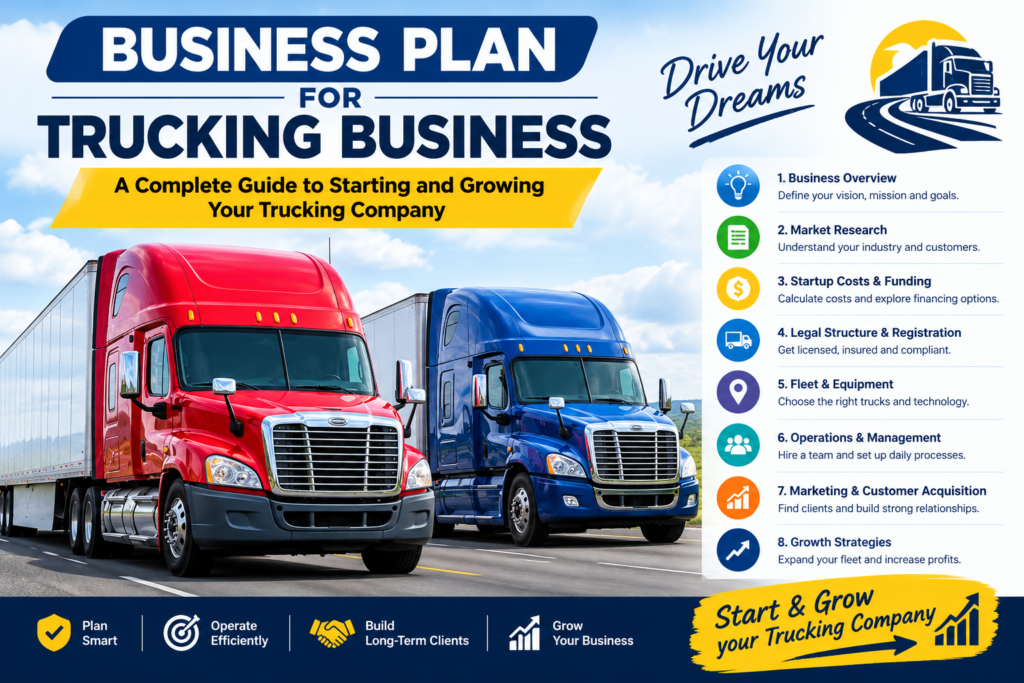
Business Plan for Trucking Business: A Complete Guide to Starting and Growing Your Trucking Company
Starting a trucking business can be an exciting venture that promises both challenge and reward. With the ever-growing demand for freight transportation, now is the perfect time to dive into this lucrative industry. But before you hit the road, there’s one crucial step you’ll need to take: crafting a solid business plan for your trucking business.
A well-thought-out plan not only helps you navigate the initial hurdles but also sets a clear path for growth and success down the line. It’s like having a GPS system guiding you through unfamiliar territory. Whether you’re looking to operate long-haul routes or specialize in local deliveries, understanding how to build your roadmap is essential.
In this comprehensive guide, we will explore every aspect of creating an effective business plan tailored specifically for the trucking sector. From startup costs to legal requirements and customer acquisition strategies, we’ll cover it all so you can steer your new company towards profitability and sustainability. Buckle up; it’s time to turn those dreams into reality!
What Is a Trucking Business Plan?
A trucking business plan serves as a blueprint for your venture. It outlines your goals, strategies, and operational details, ensuring you have a clear direction from day one.
This document typically includes an executive summary that highlights the essence of your business. You’ll detail what services you’ll provide—be it freight transportation or logistics management.
Market analysis is another critical component. Understanding the competition and identifying potential customers helps you carve out a niche in this bustling industry.
Financial projections are essential too. They offer insights into expected revenue streams, startup costs, and ongoing expenses. This information can be invaluable when seeking funding or investors.
A solid trucking business plan incorporates risk assessments and contingency plans to navigate challenges effectively. Each section works together to create a comprehensive overview that will guide you through both the initial launch and future growth stages.
How to Write a Business Plan for a Trucking Business
Writing a business plan for your trucking business begins with a clear vision. Start by outlining your mission and goals. Think about what you want to achieve in the short and long term.
Next, conduct thorough market research. Identify your target audience and understand their needs. Study competitors to find gaps that you can fill.
Detail your services, whether it’s freight hauling or logistics management. Specify the types of vehicles you’ll use and any specialized equipment required.
Include financial projections, covering startup costs, operating expenses, and expected revenue streams. This section is crucial for attracting potential investors.
Outline an operational plan that includes staffing needs, routes, and customer service strategies. Each element should reflect how you will effectively run your trucking business while meeting industry standards.
Startup Costs for a Trucking Business
Starting a trucking business involves several initial expenses that you need to plan for.
First, consider the cost of vehicles. Depending on your niche, you may need one or multiple trucks, which can be a significant investment. New trucks are pricier than used ones but often come with warranties and lower maintenance costs.
Licensing and permits also add up quickly. These vary by state and type of freight but should never be overlooked in your budget.
Insurance is another major factor. You’ll want liability coverage as well as cargo insurance to protect yourself against potential losses.
Don’t forget operational costs like fuel, maintenance, and driver salaries if you’re not driving solo.
Accounting for office supplies or software can streamline operations down the line. Planning these expenses meticulously will help set a solid foundation for your trucking venture.
Legal Requirements for Starting a Trucking Business
Starting a trucking business involves navigating various legal requirements. First, you must register your company with the appropriate state and federal authorities. This often includes choosing a business structure such as an LLC or corporation.
Next, securing an Employer Identification Number (EIN) from the IRS is essential for tax purposes. Your drivers will also need valid commercial driver’s licenses (CDL) to operate heavy vehicles legally.
Don’t overlook insurance requirements. Liability coverage is crucial, but consider additional policies like cargo insurance to protect your shipments.
Additionally, obtaining necessary permits and complying with industry regulations is vital. The Federal Motor Carrier Safety Administration (FMCSA) oversees many of these guidelines, so familiarize yourself with their rules.
Ensure that all equipment meets safety standards to avoid penalties or accidents on the road. Keeping everything above board can save you headaches down the line.
How to Find Customers and Freight
Finding customers and freight is essential for your trucking business’s success. Start by networking with local businesses. Attend industry events, trade shows, and join logistics forums to connect with potential clients.
Online platforms can also be a goldmine. Websites like Load boards enable you to find available shipments quickly. Sign up for these services to access diverse freight options tailored to your capacity.
Leverage social media too. Create professional profiles on LinkedIn or Facebook that showcase your services and capabilities. Engaging content can attract attention from companies needing transportation solutions.
Don’t underestimate word-of-mouth referrals. Happy customers are likely to recommend your services within their networks, enhancing credibility and trust in the community.
Consider partnerships with freight brokers who have established relationships in the industry. They often have a steady flow of loads that need transport, providing consistent work opportunities for you.
How to Make Money With a Trucking Business
To make money with a trucking business, start by identifying lucrative niches. Transporting goods like perishables or hazardous materials often yields higher rates due to the specialized handling required.
Invest in efficient routing software. This helps minimize fuel costs and maximizes delivery speed. The faster you deliver, the more loads you can take on.
Consider diversifying your services. Offer freight brokerage or logistics management alongside traditional hauling. This creates additional revenue streams.
Building strong relationships with clients is crucial. Reliable service leads to repeat business and referrals, which are invaluable for growth.
Regular maintenance of trucks prevents costly breakdowns and downtime, ensuring that operations run smoothly while keeping expenses low.
Keep an eye on market trends to adjust pricing strategies accordingly. Understanding demand fluctuations allows you to capitalize when rates are high.
Tips for Growing Your Trucking Company
To grow your trucking company, focus on building strong relationships. Networking with other businesses and industry professionals can lead to more opportunities. Attend trade shows, join associations, and connect online.
Invest in technology for better efficiency. Use route optimization software to reduce fuel costs and improve delivery times. This not only saves money but enhances customer satisfaction.
Consider diversifying your services. Explore shipping options like refrigerated transport or freight brokerage to attract different clients. The broader your service range, the larger your potential market.
Prioritize safety training for drivers. A safe operation reduces accidents and insurance costs while boosting your reputation in the industry.
Pay attention to feedback from customers and employees alike. Their insights can guide improvements that directly impact growth potential. Adaptability is key as you navigate the changing landscape of the trucking business.
Common Trucking Business Challenges
Running a trucking business comes with its share of challenges. One major hurdle is fluctuating fuel prices. These can significantly affect profit margins, making it essential to budget wisely.
Driver shortages also pose a significant issue. Finding and retaining qualified drivers can be difficult, especially in an industry that demands long hours and time away from home.
Regulatory compliance adds another layer of complexity. Trucking companies must stay updated on ever-changing laws regarding safety, environmental standards, and permits.
Maintenance costs for vehicles can escalate quickly. Regular upkeep is crucial but often expensive, which means planning ahead financially is vital for sustainability.
Competition in the trucking sector is fierce. Distinguishing your services from others requires innovation and exceptional customer service to build loyalty among clients. Balancing these challenges while striving for growth keeps many owners on their toes daily.
Trucking Business Plan Example
Creating a trucking business plan example can clarify your vision. Start with an executive summary, outlining your mission and goals.
Next, detail the services you’ll provide—whether it’s long-haul transportation or local delivery. Highlight your target market and how you plan to reach them.
Include financial projections that cover startup costs, operational expenses, and revenue forecasts. This section is critical for attracting investors or securing loans.
A marketing strategy should follow. Discuss online presence through a website and social media channels to engage potential customers.
Don’t forget about operations management. Describe how you’ll manage logistics, vehicle maintenance, and driver recruitment.
Consider risk analysis by identifying potential challenges in the industry such as fuel price fluctuations or regulatory changes. A solid plan anticipates these issues while providing solutions.
Frequently Asked Questions About Trucking Business Plans
Starting a trucking business can be a rewarding venture. However, having a solid plan is crucial for success. Many aspiring entrepreneurs have questions about creating an effective business plan for their trucking company.
One common question is: What should I include in my business plan? Ideally, it should cover your mission statement, market analysis, marketing strategy, organizational structure, and financial projections. Each section needs to align with your goals and the realities of the trucking industry.
Another frequently asked question revolves around startup costs. How much capital do you actually need? Startup costs can vary widely depending on factors like equipment purchases or leasing vehicles. It’s essential to research these expenses thoroughly and prepare accordingly.
People also wonder about legal requirements when starting a trucking business. Securing proper licenses and permits is vital to ensure compliance with federal and state regulations. This includes obtaining a commercial driver’s license (CDL) as well as registering your business entity.
Finding customers can seem daunting at first; however, networking plays an important role here. Attending industry trade shows or joining online platforms can connect you with potential clients looking for freight services.
When it comes to making money in this field, understanding pricing strategies is key. Researching competitors will help establish competitive rates while ensuring profitability remains intact.
As you grow your trucking company, consider leveraging technology such as tracking software that optimizes routing efficiency or fuel management systems that minimize operating costs.
Be prepared for challenges like fluctuating fuel prices or regulatory changes impacting operations—staying informed makes navigating these hurdles easier.
Arming yourself with knowledge answers many uncertainties associated with writing a successful business plan for your trucking venture! If you’re still unsure about any aspect of launching this exciting journey ahead of you – keep researching until every question finds its answer!