7 Functions of Marketing: A Complete Guide
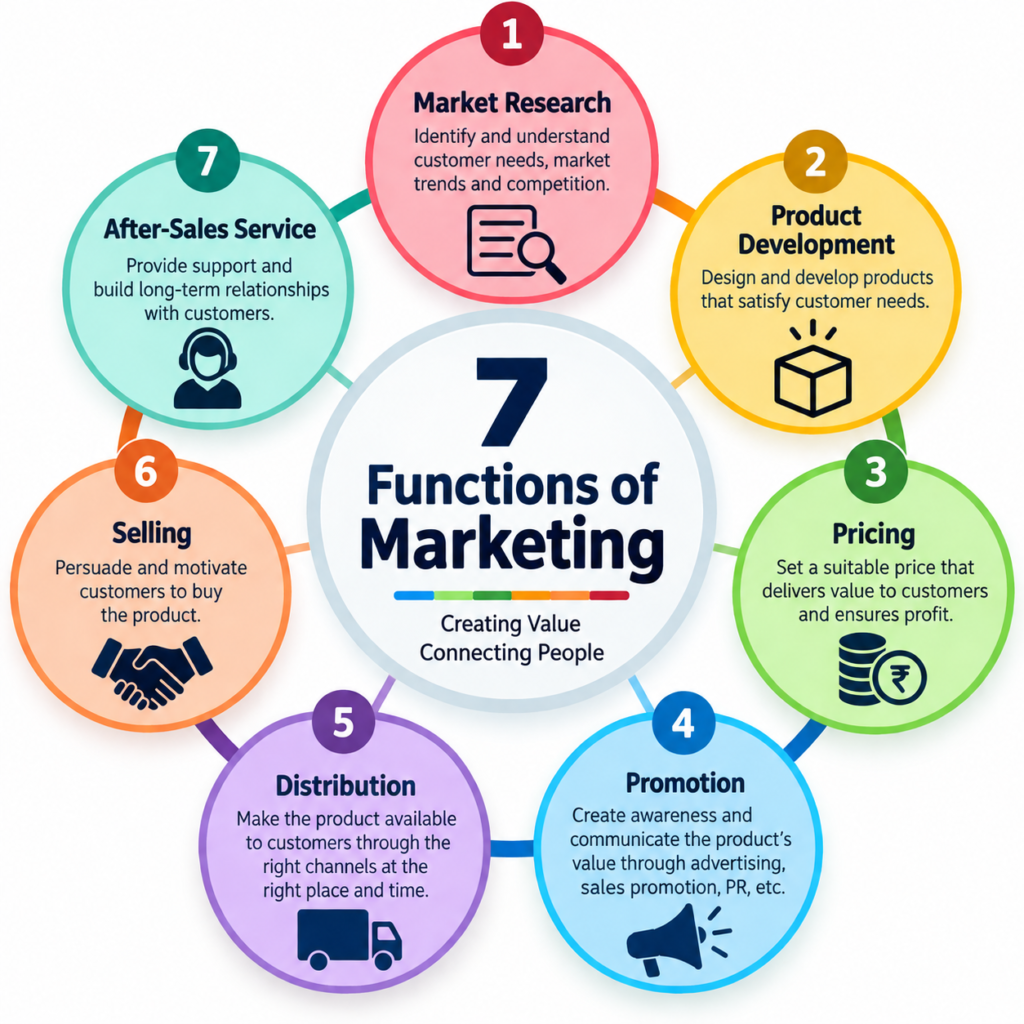
Marketing is a dynamic landscape that shapes how products and services reach consumers. Understanding the 7 functions of marketing can unlock insights into this critical process. These essential functions not only drive sales but also create connections between businesses and their audiences. Whether you’re a seasoned marketer or just starting, grasping these functions will enhance your strategy and effectiveness.
From buying to selling, each function plays a vital role in delivering value to customers. As we dive deeper into these concepts, you’ll discover how they interconnect to form the backbone of successful marketing campaigns. Let’s embark on this journey to uncover the core elements that make marketing tick!
7 Functions of Marketing: Meaning, Importance, and Examples
The 7 functions of marketing serve as a framework for understanding how products move from producers to consumers. Each function plays a distinct role in ensuring that businesses can meet consumer needs effectively.
These functions encompass buying, selling, transportation, storage, financing, risk-bearing, and standardization and grading. Together, they create a seamless flow of goods and services.
Understanding their importance is crucial for any marketer. For example, the buying function involves identifying consumer demand and securing products accordingly. Meanwhile, the selling function translates those goods into successful transactions through effective communication strategies.
Each aspect contributes uniquely to the overall marketing strategy. By recognizing how these functions interact with one another, businesses can enhance efficiency while maximizing customer satisfaction—key components in today’s competitive market landscape.
What Are the 7 Functions of Marketing?
Marketing is more than just a buzzword. It encompasses various functions essential for business success.
The buying function focuses on acquiring products or services that meet consumer needs. This process involves understanding market trends and customer preferences.
Next is the selling function, which drives revenue. Here, marketers engage customers to persuade them to purchase offerings.
Transportation plays a crucial role in moving goods from producers to consumers efficiently. This ensures that products are available where they’re needed most.
Storage comes into play by keeping inventory until it’s sold. Proper storage balances supply with demand, preventing losses.
Financing provides the funds required for marketing activities and product development, enabling companies to grow sustainably.
Risk-bearing involves managing uncertainties linked to changing market conditions or consumer behavior. Businesses must navigate these risks wisely.
Standardization and grading ensure quality consistency across products, building trust among consumers while facilitating easier comparisons between options.
Buying Function
The buying function is a critical aspect of marketing. It involves acquiring goods and services to meet consumer demand. This process begins with understanding what customers want and need.
Marketers must identify target audiences and analyze their purchasing behaviors. They gather insights from market research to guide decisions on product offerings, pricing, and promotion strategies.
Effective buying creates value for both consumers and businesses. By sourcing the right products at competitive prices, companies can improve customer satisfaction while maximizing profitability.
This function also includes negotiating with suppliers. Building strong relationships ensures consistent quality and availability of products in a competitive marketplace.
The buying function lays the foundation for successful sales efforts. When done well, it aligns supply with demand seamlessly, leading to positive outcomes for all parties involved.
Selling Function
The selling function is a critical component of marketing. It involves direct interactions between businesses and consumers. This process transforms potential interest into actual sales.
Sales teams play a pivotal role here. They engage customers, address their needs, and provide tailored solutions. Strong communication skills are essential in this area to build trust and rapport.
Effective selling also relies on understanding customer behavior. Knowing what drives a purchase can lead to more successful tactics. Personalization enhances the experience, making customers feel valued.
Additionally, the selling function extends beyond face-to-face interactions. Online platforms have revolutionized how products reach consumers. E-commerce continues to grow, emphasizing the need for adaptive strategies.
Success in sales contributes directly to revenue growth and brand loyalty. Each transaction not only fulfills immediate goals but also builds lasting relationships with clients.
Transportation Function
Transportation plays a crucial role in the marketing process. It involves moving products from manufacturers to consumers efficiently and effectively.
This function ensures that goods reach their destinations on time. Whether it’s trucks, trains, ships, or planes, each mode of transport has its advantages and challenges. Selecting the right one can impact costs and delivery times significantly.
Additionally, transportation affects customer satisfaction. Reliable delivery builds trust with customers while delays can harm business relationships.
Companies often analyze routes and logistics to optimize their transportation strategies. This not only reduces expenses but also enhances service levels across various channels.
Integrating technology into transportation is becoming increasingly common. Tracking systems allow businesses to monitor shipments in real-time, ensuring transparency for both sellers and buyers alike.
Storage Function
Storage function plays a crucial role in the marketing process. It ensures that products are available when consumers need them. Without effective storage, supply and demand could easily fall out of balance.
This function involves keeping goods in warehouses before they reach retailers or customers. Proper storage helps to maintain product quality over time, preventing spoilage or damage.
Efficient storage solutions can also reduce costs for businesses. By optimizing warehouse space and inventory management, companies minimize waste and streamline operations.
Moreover, the storage function supports seasonal fluctuations in demand. Businesses can stockpile products during peak seasons and distribute them when sales slow down. This flexibility keeps consumers satisfied by ensuring product availability year-round.
In a competitive market, mastering the storage function can give brands an edge over their rivals. The right strategies ensure that products move smoothly from production to consumption without unnecessary delays.
Financing Function
The financing function of marketing plays a crucial role in the smooth operation of any business. It involves securing the necessary funds to support various activities and initiatives, ensuring that products can be produced, marketed, and delivered efficiently.
This function helps companies manage their budgets effectively. Businesses must assess costs associated with production, distribution, and promotion. By doing so, they can allocate resources wisely.
Moreover, financing creates opportunities for businesses to invest in growth strategies. Whether it’s launching new products or expanding into different markets, having adequate funding is essential for success.
Additionally, understanding customer payment options falls under this category. Offering flexible payment plans or credit facilities can enhance sales by making products more accessible to consumers.
In essence, financing serves as the backbone of marketing operations by enabling firms to fulfill their objectives while navigating financial challenges seamlessly.
Risk-Bearing Function
Risk-bearing in marketing revolves around the uncertainties businesses face. Every decision holds potential risks, and navigating them is crucial for survival.
When companies invest in products or services, they often encounter market fluctuations. Consumer preferences can shift overnight, impacting sales forecasts and inventory management. The risk-bearing function helps mitigate these challenges by allowing firms to anticipate changes.
Marketers analyze data trends to understand possible outcomes. They may create contingency plans based on various scenarios that could arise from economic shifts or competitor movements.
This function also involves financial risks associated with production costs and supply chain issues. By understanding these factors, organizations can make informed decisions that reduce exposure.
Embracing risk is part of innovation. Companies willing to take calculated risks often find new opportunities for growth while maintaining stability amidst uncertainty.
Standardization and Grading Function
Standardization and grading are essential components of the marketing process. They ensure that products meet certain quality benchmarks, making it easier for consumers to make informed choices.
This function involves setting clear criteria for product characteristics. These might include size, weight, color, or functionality. By adhering to these standards, businesses can provide consistency across their offerings.
Grading takes this a step further by categorizing products based on quality levels. Think of fresh produce at your local grocery store; fruits may be graded as A, B, or C based on appearance and ripeness.
Such classification simplifies purchasing decisions for customers. It builds trust in brands that consistently deliver high-quality goods while helping companies reduce waste and returns from unsatisfied buyers.
Standardization and grading enhance market efficiency by creating clearer expectations between sellers and buyers.
Why Are the 7 Functions of Marketing Important?
The 7 functions of marketing play a crucial role in the success of any business. They create a structured approach to understanding consumer needs and preferences.
By effectively managing these functions, companies can streamline operations and enhance customer satisfaction. Each function addresses specific challenges within the market landscape, ensuring products reach consumers efficiently.
Additionally, they foster communication between businesses and their audience. This connection builds trust and loyalty over time.
Understanding these functions also helps businesses adapt to changes in trends or technology. It allows for proactive strategies rather than reactive ones.
Moreover, mastering these elements can lead to better resource allocation. Companies optimize their investments by focusing on what truly matters—delivering value to customers while achieving profitability.
Examples of the 7 Functions of Marketing
Examples of the 7 functions of marketing are abundant in everyday scenarios.
Take the buying function, for instance. A restaurant purchasing fresh produce from local farmers exemplifies this well.
In terms of selling, think about an online store promoting seasonal discounts to boost sales during holidays.
Transportation comes into play when goods are shipped across states, ensuring products reach their destination efficiently and promptly.
For storage, consider a warehouse that holds surplus inventory until demand increases. This helps manage supply effectively.
Financing can be seen when companies offer payment plans to customers, making high-ticket items more accessible.
The risk-bearing function manifests through insurance policies protecting businesses against potential losses or damages incurred during operations.
Standardization and grading can be illustrated by food brands labeling their products with quality grades like “organic” or “extra virgin,” guiding consumer choices based on desired standards.
Conclusion
Understanding the 7 functions of marketing is essential for anyone looking to navigate the complex world of business. Each function plays a crucial role in ensuring that products and services reach consumers effectively and efficiently. From buying and selling to transportation and storage, these functions are interlinked, creating a seamless flow from production to consumption.
Recognizing the importance of financing, risk-bearing, and standardization can further enhance your marketing strategy. By integrating these elements, businesses can not only meet customer needs but also adapt to market changes with agility.
The examples provided illustrate how various companies successfully implement these functions in real-world scenarios. This knowledge equips marketers with insights they need to thrive in competitive environments.
Whether you’re a budding entrepreneur or an established business owner, mastering the 7 functions of marketing will empower you to make informed decisions that drive success. Embrace these principles as part of your marketing toolkit, and watch your endeavors flourish.